

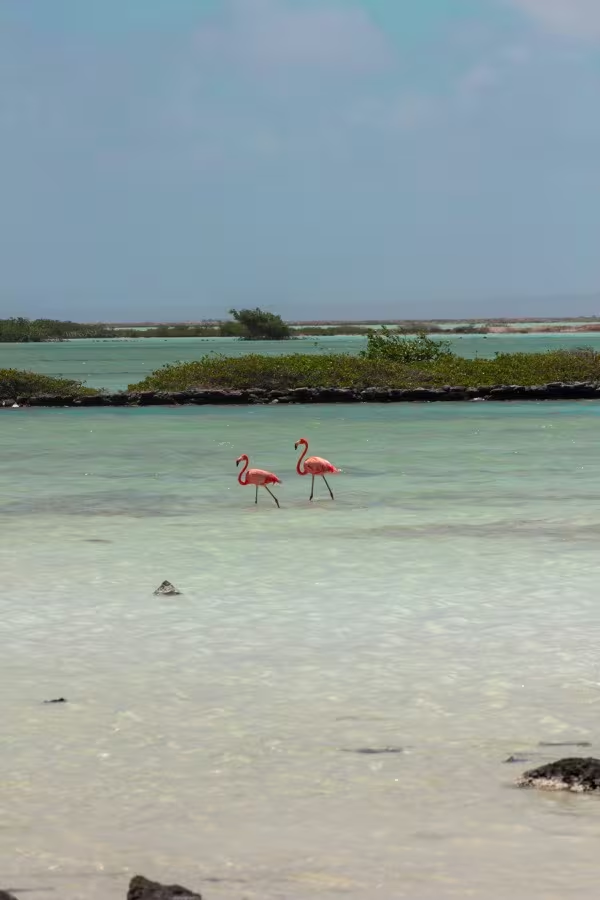
If you do one piece of admin before your trip, make it this one. Everyone who enters the water around Bonaire — swimmers, snorkelers, divers, windsurfers, kayakers — needs a STINAPA Nature Tag. It's not a tourist tax dressed up in green: it's the reason Bonaire still has one of the healthiest reefs in the Caribbean, and it pays for real, active conservation happening while you're here.
Who is STINAPA?
STINAPA — Stichting Nationale Parken Bonaire — is the island's own non-profit conservation foundation. It manages both of Bonaire's national parks: the Bonaire National Marine Park, which has protected the whole coastline (and the waters around Klein Bonaire) from the high-water line down to 60 metres since 1979, and Washington-Slagbaai National Park — 14,000 acres of wild north, established in 1969. Both run, largely, on the Nature Tag. No tag, no rangers; no rangers, no reef. It really is that direct.
What your $40 is actually fighting for
This is the part the receipt doesn't tell you. Your Nature Tag isn't just "access" — it funds a working conservation programme across six fronts:
- The reef's health, right now. Bonaire's corals are under threat from SCTLD — stony coral tissue loss disease, a fast-moving killer sweeping the Caribbean. STINAPA teams monitor and treat affected colonies; it's the front line of keeping the reef you came to see alive.
- Invasive species control. The lionfish you'll sometimes see speared on a dive? That's active management — invasive lionfish devastate native reef fish, and keeping them in check is ongoing work.
- Protected species. The parks shelter flamingos, the yellow-shouldered parrot (the lora), iguanas, and sea turtles — Bonaire's waters are feeding and nesting grounds. Rangers and researchers watch over them.
- Water quality & the moorings. Monitoring keeps the water clean enough for coral to thrive, and the public mooring buoys let boats operate without ever dropping anchor on the reef.
- Science & monitoring. Long-term reef and habitat research — the data that tells conservationists what's working and what isn't.
- The next generation. STINAPA's Junior Rangers and afterschool programmes teach Bonairean kids to protect what they'll inherit. Conservation that outlives all of us.
There's far more depth at stinapabonaire.org — the organisation's own site, worth a read if the reef moves you.
The Nature Tag — one fee, one QR code
The practical side is refreshingly simple. Since 2023 it's one flat fee of $40 for every water user — divers and non-divers alike, no separate rates — and children under 12 go free. Pay once, covered for the whole calendar year, however many times you get wet.
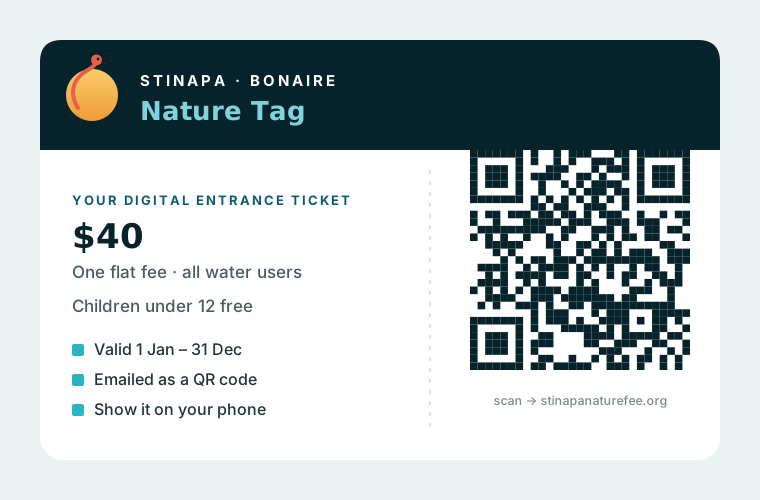
- Buy it online at stinapanaturefee.org. Within minutes you get two emails: a payment confirmation and your personal QR-code Nature Tag.
- Or at a dive shop — most on the island can process the fee (cash or card) and issue proof on the spot.
- Validity: 1 January – 31 December of the year you buy it. Tags for next year go on sale in December.
- Proof: keep the QR on your phone (screenshot it for offline use) or print it. Dive shops check it before renting tanks, boat crews before departure, rangers can ask at the water's edge.
Rates can change — stinapanaturefee.org always shows the current amount.
The reef rules — how not to undo the work you paid for
The tag buys access; these rules keep the access worth buying. STINAPA enforces them, but culture does most of the work:
- Don't touch anything — no coral, no creatures. No gloves, which make touching tempting.
- Don't stand on coral. Fin up, watch your buoyancy, find sand if you must stand.
- Take nothing — no shells, no coral fragments, nothing living or dead.
- Reef-safe sunscreen only, or cover up with a rash guard.
- Boats use the public moorings — anchoring on the reef is out.
- See something wrong — an injured turtle, diseased coral, illegal fishing? Report it to STINAPA. You're their extra eyes.
Put the tag to work
Once you're paid up, the whole marine park is yours — and the best introductions to it are run by the local crews who work inside it every day:


FAQ
How much is the Bonaire nature fee?
Since 2023 it's a single flat fee of $40 for every water user — the same for divers and non-divers. Children under 12 are free. Rates can change, so stinapanaturefee.org always shows the current amount.
What does the nature fee actually pay for?
Real conservation work: monitoring and treating coral disease (SCTLD), controlling invasive lionfish, protecting flamingos, parrots, iguanas and sea turtles, water-quality monitoring, the mooring buoys that spare the reef from anchors, scientific research, and youth education. It funds STINAPA's management of both national parks.
Do I have to pay if I only swim or snorkel?
Yes. The Nature Tag applies to everyone entering the water for any activity — swimming, snorkelling, diving, windsurfing, kayaking. Staying on dry land is the only exemption; children under 12 don't pay.
What is the Nature Tag and how do I get it?
It's your digital entrance ticket: a QR code. Pay online at stinapanaturefee.org and it arrives by email within minutes, or buy it at most dive shops. Keep it on your phone — operators and rangers routinely ask to see it.
How long is the Nature Tag valid?
For the calendar year in which you buy it, 1 January to 31 December. Return visits within the same year are covered; a new year means a new tag. Tags for the coming year go on sale in December.
Does the Nature Tag include Washington-Slagbaai National Park?
Park entry is tied into the STINAPA system — check the park guide and STINAPA for exactly how entry works with your tag, plus current opening hours, before making the drive north.
Tag sorted? Get in the water: start with diving on Bonaire, plan a trip to Klein Bonaire, or take the truck north to Washington-Slagbaai.